Originally published in The Gateway Issue No. 48 (September 2013)
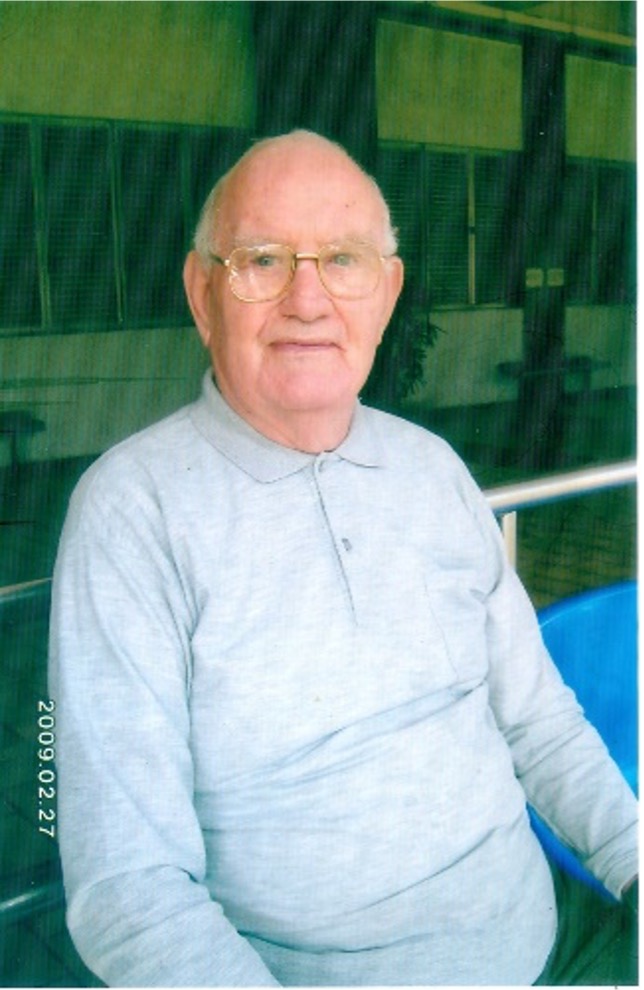
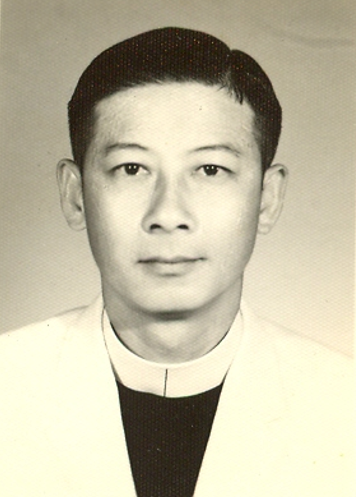
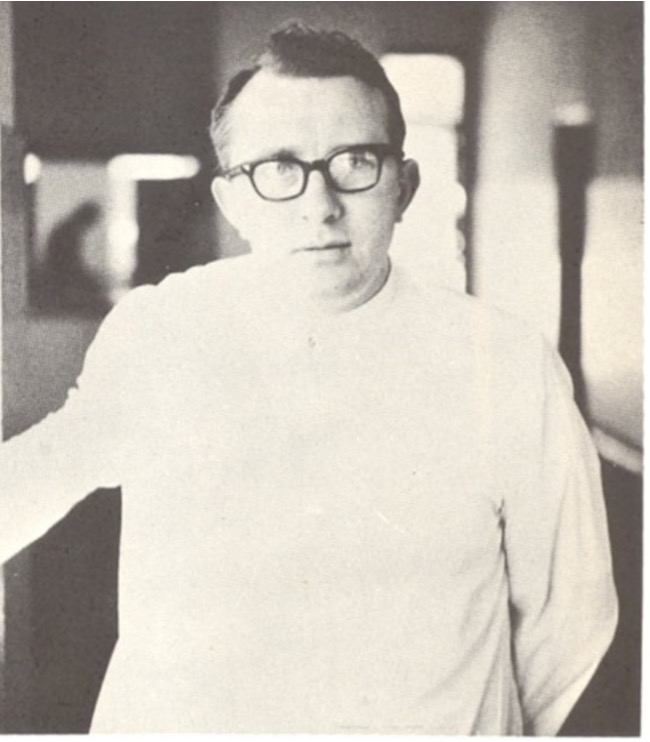
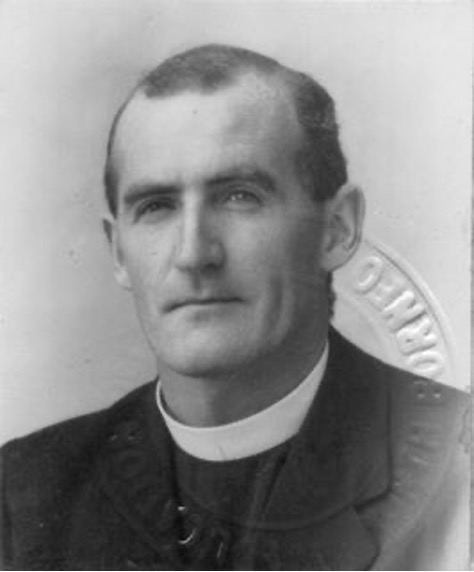
David, the future Brother Xavier, was born to David and Honora Jones on 25th August 1933, the second youngest in a farming family of six boys and one girl, at The Line, Meelin, near Newmarket, Co. Cork, Ireland. Four of the boys went on to join the religious life, two as Presentation Brothers and two as De La Salle Brothers. “Actually we were brought up in a very religious atmosphere where the father of the family got the children on their knees for the Rosary every evening and if you got off your knees before your father you would be in trouble!” Brother Xavier would maintain that it was the influence of his elder brothers as well as the good example of Brothers from his locality that made up his mind to join the De La Salle Brothers. An elder brother, Francis, who had already joined the De La Salle Brothers, met a sad end in the Scholasticate when he died during the night of a brain haemorrhage. David was to retain an abiding love for his family and for his native county, and spoke frequently of both with pride.
He started school in 1939, the year that the Second World War broke out in Europe. “Food was rationed. In fact, just about everything was rationed. It was not enough to have money. You also had to have coupons. Once you used up your coupons, you could buy nothing.” He received his early education at the local Primary school before joining the De La Salle Juniorate in Castletown, Co Laois, in 1947, at the age of 14. In 1950 he advanced to the Novitiate and was given the name Brother Xavier Finbarr in religious life and it was as Brother Xavier that he was known for most of his life in the Far East. It was in the Novitiate also that he volunteered to serve on the missions, and in 1951 went across to Inglewood Scholasticate in Berkshire, England, to prepare for work in the East. In August 1954, after completion of O and A Level examinations, together with five other young Brothers, he travelled to France and set sail from Marseilles on the liner, the Felix Rousell, for the three weeks voyage to Singapore.
After being welcomed by the Singapore Brothers the group next took a train north through Malaya to Penang, the headquarters of the District. After a few months in Penang, Brother Xavier was posted to St. Joseph’s Secondary School, Kuching, his first full-time teaching post, in the state of Sarawak on the island of Borneo. Borneo was known as the ‘Land of Headhunters’, and blackened skulls still hang as trophies in the longhouses where people live. It was in Kuching that Xavier refined his skills as a teacher, especially of Religious Studies and English. It was there, also, that he came across a number of those intrepid missionaries called the Mill Hill Fathers, who had been running St Joseph’s before the arrival of the Brothers. Many of the priests worked far away, in jungle territory, and when they returned for some rest and recreation would regale the Brothers with hair-raising or very humourous stories. Brother Xavier had great time for these men in their difficult mission.
In school, he was a dedicated teacher, well-liked and respected by his students. One of his school Principals at the time was Brother Henry O’Brien who hailed from Brother Xavier’s home county. Brother Henry believed in strict but reasonable discipline and also in correcting the students’ assignments and he led from the front. The staff followed his example. After five years in Kuching, he taught briefly in Sacred Heart School, Sibu, the second largest town in Sarawak, before returning to England to do his teacher training at Hopwood Hall Training College, Middleton, Manchester, from 1960-1962.
Hopwood Hall Teacher Training College was run by the De La Salle Brothers. The grounds were spacious. The lecturers were of high calibre. The teaching practices in local schools were well arranged and prospective teachers got a real taste of what their careers would entail. The Director of the Brothers at the time was Brother Maximus Bangs, a scholar and a gentleman, and for whom Brother Xavier had the greatest respect. He thrived in the Training College setting. Since he and a few others were of an older vintage, they were regarded as ‘mature’ students, with a few privileges attached. An added bonus for football fans was the occasional outing to Old Trafford to watch the stars of Manchester United on show, players like Dennis Law, Bobby and Jack Charlton and the peerless George Best.
In 1962 he returned East and, after some months in Sacred Heart School, Sibu, Sarawak, was posted to St. Mary’s Secondary School, Sandakan, Sabah, on the north-east tip of Borneo, where he taught for five more years. Sandakan is known as ‘Little Hong Kong’ and there Xavier met and taught numerous Chinese students before meeting and teaching many more later in Hong Kong itself. The school Principals during his time in St Mary’s were Brother Raphael Egan and then Brother Fridolin Gaughran. St Mary’s was a homely school with a fine family atmosphere. The jungle was very close, however, which meant that the mosquitoes were also close. There was no air-conditioning, so the mosquito net over the bed was de rigeur. God help the sleeper if there was a hole in the net! Since Sandakan was a little off the beaten track, it was not always easy to have a full complement of teaching staff. Brother Xavier and his companions had to fill in every so often. It was not easy but they took it all in their stride.
Fifty years later, his students at St Mary’s had not forgotten their former teacher and were planning a Grand Reunion in Sandakan for May 31st 2013. They had invited Brother Xavier as Guest of Honour and he had been hoping against hope that he could make it. The Lord intervened, calling him instead to the heavenly banquet.
In 1967 he was asked to return to Ireland to do his degree studies at University College Dublin and in 1970 he graduated with a BA degree in English, History and Ethics/Politics. A Brother colleague recalls:
“Brother Xavier took his studies seriously. He collected many reference books, read widely and sought advice when necessary. He was not above relaxing at times and we would head off for a couple of pints of Guinness where, among other things, we would discuss the merits or otherwise of our lecturers. One thing was for sure – Brother Xavier never took his academic results for granted and he worked hard right to the end.”
Another student Brother writes: “Xavier impressed me as a serious man. He took his religious life, his studies and his relationship with others maturely, sensibly and in his stride”, probably in contrast with the younger students around him. But at the same time he had an abiding sense of humour and a hearty laugh. He was noted for his prodigious memory up to the very end and in cases of doubt about past events he was often consulted. In their own dialect his past pupils in Borneo might say, “He had the memory of an old bull elephant”.
On returning to the East in November 1970, he was assigned back to Sandakan in Sabah but had to wait in Hong Kong for a work pass. It never came. And so he was appointed to Hong Kong, which would be his home for the rest of his life in Asia. His first assignment was to St Joseph’s College where he taught for 21 years and where he is described by Brother Thomas Favier, as “a marvellous Brother.” He taught at various levels but gradually made Form 5, the public examination level, his stamping ground. Many a student can thank him for making it through the English and Religious Studies papers. He taught clearly, gave notes and corrected reams of exercise books. Besides English and Religious Studies, he also taught Physical Education, usually called PE. When he could not demonstrate the physical exercises himself, he would get a student to lead. Only after that would he allow the students to play ball games.
Then came promotion in the form of appointment as school Discipline Master. He took this duty seriously, always trying to follow St La Salle’s dictum of being firm but kind. At an interview with the students in 1982, he felt that the overall discipline in the school was better than in the days of old and attributed this largely to the fine boys that came from St Joseph’s Primary School. He felt that our Primary School Principal and staff deserved much credit for turning out such good students. He also distinguished between order and discipline. He would point out that there might be some lack of order at times rather than indiscipline as such. When it came to the question of ‘hair’, Xavier himself sported side-locks and was pretty lenient dealing with hair transgressions. He kept an eye on the fashion trends of the time.
Of course, because of his title as Discipline Master, the boys kept an eye on him. Here is an interesting take from one of them: “I have not had the privilege of being in one of the classes of Brother Xavier, but I will always remember him standing at the main entrance after lunch time ended, waiting for the latecomers including myself. At the sight of him (and before he caught sight of us) we would turn downhill along the Tramway Path to enter through one of the back doors. Now that he is in the Eternal Home, my hope is that I will one day gladly greet him instead of sneaking away if he would again stand at the entrance there.”
In the same interview he was asked for his views on moral education. He felt that it was the most important part of the curriculum. He also stressed that it must have practical application to daily life and not be viewed solely as an examination subject, a chance to score high marks.
One of his students at the time was studying in Form 5C with Brother Xavier as form master and English teacher. This is his memory: “Of course, being young and innocent at the time, we automatically thought he was English. One of the boys made the unfortunate mistake of mentioning it to him one day. Now we all know how Brother Xavier used to turn all red when he was upset, and he was red. But he did not get mad at us. He knew the insult was unintentional and due to ignorance. So he said, "Irish! Irish! Not English!”, and he proceeded to give us a lesson in geography as well as the difference between a true Irishman and an Englishman, culturally, morally, and in the creation of all things beautiful! Since then, I personally have had many, many Irish friends over the years. But I never made the mistake of calling an Irishman English again. They would not be as forgiving as Brother Xavier!
Another student had this very personal encounter: “I really appreciated Brother Xavier who was my Godfather. I really missed him. During his hospitalization, my kids always asked about their God grandfather a lot. I told them that he was getting well. They were preparing a Get Well wish to him..... Brother Xavier helped me and guided me even when I left St Joseph’s College and became a catholic. He never was my school teacher and never taught me any lesson in SJC. How we met was really a miracle. When he was acting Principal in SJC in 1978, he gave me chance and great support when I was young and inexperienced in organizing the Inter-school Badminton Competition. Since then we had built up our relationship. Later when I left SJC, he introduced Father Malone to me and I got baptized. I had the honour to have Brother Xavier as my Godfather. Thank God for giving me a chance to meet such an esteemed person who led me and guided me to become a Catholic and a man as well. I really missed him a lot. I am writing to send my best regards to his family. God Bless!”
For a change and relaxation he would go hiking, usually starting from St Joseph’s and climbing up the rather steep mountain called the Peak, and walking round the road at the top before heading home. These hikes were made sometimes in the company of other Brothers and sometimes alone. This hiking schedule was all the more admirable when we consider that he was now suffering quite a bit from his long-term ailment, ankylosing spondylitis. Brother Xavier would never give in to this affliction and drove himself by sheer will power. The fusion of the vertebrae and curvature of the spine were becoming more and more obvious. Nowadays, hiking alone and without a cell phone would be considered risky but those were different days. Occasionally, when convenient, he would go for a swim, since this exercise was highly recommended by the doctors.
Brother Xavier, as with the rest of folk, had some pet dislikes. One was of impromptu requests. He wanted to be informed of or invited to functions well in advance. Another was what he regarded as any invasion of privacy. This applied particularly to the Brothers’ Quarters. Since it was the Brother’s home, he felt that people should not drop in unannounced. On some occasions he would even stand guard during lunch break in case students wandered into the inner sanctum. A third was in the area of authority. He liked a level playing field and, while respecting those in authority, did not believe in undue deference.
A more humourous dislike revolved around the question of good and poor whiskey. He would sing the praises of Black Label as opposed to White, maintaining, against all opposition, that White led to headaches whereas Black would leave you clear-headed!
Whenever there was a sing-song, Brother Xavier would actively join in and usually rendered old favourites like ‘The Banks of my own Lovely Lee’ and ‘Biddy Hogan’ and made it clear that ‘Irish’ songs were to be preferred. That said, he was not at all averse to listening to classical music.
Towards the end of his long term in St Joseph’s, in 1989, he was given a one year career break back in Ireland. During this period he took up a course in theology and philosophy. On his return to Hong Kong, he was asked to teach in Chan Sui Ki (La Salle) College, Kowloon. He had to commute each day through the very busy Cross Harbour Tunnel.
Then, in 1991, he was transferred to teach at La Salle College, Kowloon, to teach part-time. He was now approaching the end of his teaching career, which occurred in 1993 when he officially retired. He tutored one or two students to keep his hand in. In 2003 he returned to the community of St Joseph’s College, his old stomping ground.
By the new millennium the old spondylitis ailment was becoming more and more difficult to bear. A bad fall in the bathroom necessitated a very long hospitalization of over 6 months. Painkillers, physiotherapy and nursing care eventually made it possible for him to be discharged but a personal career was employed to help rehabilitation. It was around that time that he began to think seriously of a final return to Ireland and this was effected at the end of December 2005.
He was first accommodated in the Brothers’ care centre for the elderly called Miguel House, Castletown, Co Laois. However, he felt he had not yet reached the stage for round-the-clock care and before long was able to move to the Brother’s community at Ballyfermot, Co Dublin. There he restarted his regimen of hikes and walks around the local parks and would occasionally take the bus into the city. The Brothers took good care of him and he had some good quality retirement years in Ballyfermot. Then, in 2012, he had another fall, while visiting his folk at home, and had to be sent to the Mater Hospital where it was touch and go for a while. An operation on the spine seemed to be successful and after a time he was sent to Tullamore Hospital for recuperation.
There he had good days and bad days, occasionally drifting in and out of consciousness. As his health deteriorated sharply, Xavier knew he was unlikely ever to walk again and the quality of life ahead of him was very poor. Yet he remained positive, bright and cheerful. As one of the Brothers who visited him in Tullamore hospital says, “I admired his patience, acceptance and endurance, even as he faced a very dark future. He was uncomplaining and undemanding, and retained his wry sense of humour to the end”. He was thrilled with visits from some of his former students in Hong Kong, realizing they had come a long way and that it was unlikely he would ever see them again.
Brother Stephen Deignan, former Visitor of the District of Ireland, takes up the story: “Brother Xavier returned to Miguel House, Castletown, from Tullamore Hospital in the week before Christmas. In spite of the realisation that an accident had caused him to lose all power in his legs, he was mentally and psychologically strong and, as he said, delighted to be ‘home among friends’. Though confined to a wheelchair, he had come to terms with the new reality and was regularly at Mass in the Community Oratory. On occasion, he would lapse into sleepy consciousness but, by and large, he was alert and chatty and interested in the affairs of Miguel House and the affairs of State. He treasured the cards and e-mails received from his friends in Hong Kong and Borneo and the carers displayed them in his room.
It did, therefore, come as a great shock to everyone when it was announced, early on Tuesday, 15 January, that Br. David had passed away, quietly and peacefully during the night. He had awakened around 1.45, enquired about the time and asked for a cup of tea. When the carer returned a few minutes later with the tea, she discovered that he was dead. Quietly and peacefully, he had gone “gentle into that good night”; no “railing against the dying of the light”.
All his relations and friends both at home and abroad were informed immediately and the arrangements for the funeral were agreed. There would be rosary on Wednesday evening at 8.00pm and Requiem Mass on Thursday at 2.00pm. Very large numbers came for the Rosary on Wednesday, among them many of his relations, friends and neighbours from his native village in Cork – some 120km away. The funeral on Thursday was a truly genuine celebration of Brother Xavier’s life and death, a life devoted to the education of the young in Borneo and Hong Kong. The Oratory in Miguel House was full to overflowing for the removal.
The Mass was celebrated in the old Novitiate chapel. The chief celebrant was Father Tom Hubbard, Chaplain, assisted by Fathers Willie Hennessy, Parish Priest of Castletown, Father David Herlihy, Parish Priest of Brother Xavier’s native parish and Father Walter Cooke, a returned missionary from New Zealand. It was a solemn occasion with organ accompaniment and harmonious hymn-singing led by Brother John Connaughton. The Readings were taken by members of Brother Xavier’s extended family; the intercessory prayers were recited by family representatives and others and Brother Columba Gleeson delivered a very beautiful and very appropriate homily, dwelling especially on Brother Xavier’s early life and educational formation and his very significant contribution to the Lasallian education mission in several centres in Borneo and Hong Kong. He emphasised aspects of Brother Xavier’s character and personality, listing his patience, his gentleness and his wry humour and courage in the face of a spinal disability which stayed with him throughout his life. He emphasised Brother Xavier’s joy great love and admiration for the families and students he had educated and his own personal satisfaction in spending himself in ‘educating at the coal-face’. He mentioned his great ability to influence his students and others by touching their hearts, quoting from adulatory E-Mails from former students which had arrived in the days after his death. He quoted too, from the Nurses and carers in Miguel House who referred to Brother Xavier as ‘a lovely gentleman and a great patient’.
After Mass, Brother Xavier was buried in the Brothers cemetery in Castletown.
Brother Xavier never held or aspired to positions of authority or leadership. His work was at the coalface; his was the daily grind where he worked with dedication and commitment in the classroom. And here too lay his true greatness, as reflected in his ability to touch hearts and shape lives. That, for a teacher, is a mark of true greatness.
We know that you have not really left us but just gone ahead, on the road where we too follow.”
The passing of Brother Xavier did not go unnoticed in Hong Kong. Many messages of memories and condolences were posted on the St Joseph’s College Old Boys’ website. The College also held a memorial Mass which was well attended by staff and old boys. Brother Thomas Favier, Supervisor, delivered a touching eulogy. Some of the old boys who attended the Mass had travelled all the way to Ireland to visit Brother Xavier in his final years.
We leave the final word to Brother Xavier himself: “I believe God puts us on earth for a purpose, and not by chance. I think we have a role to play and we should keep it.”