Originally published in The Gateway Issue No. 47 (June 2013)
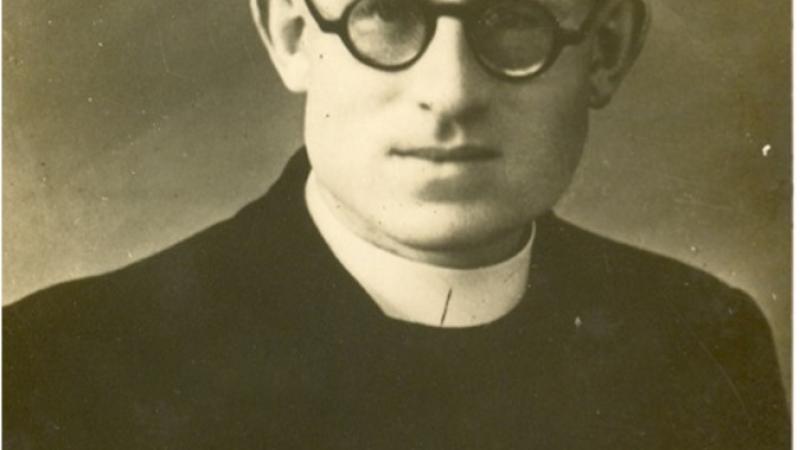
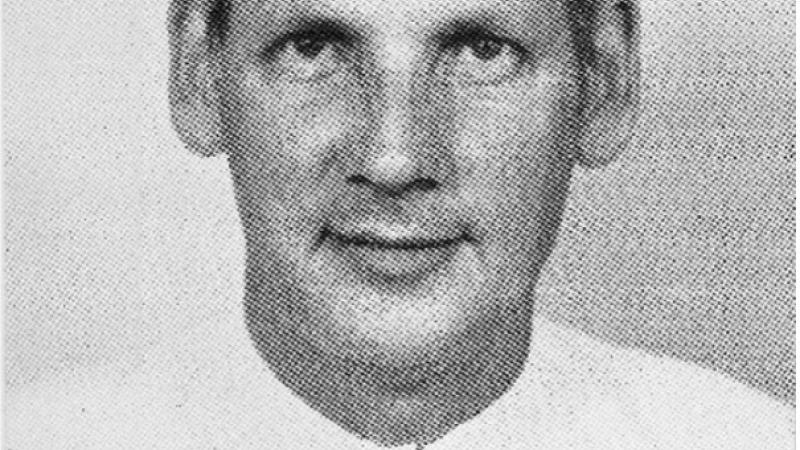
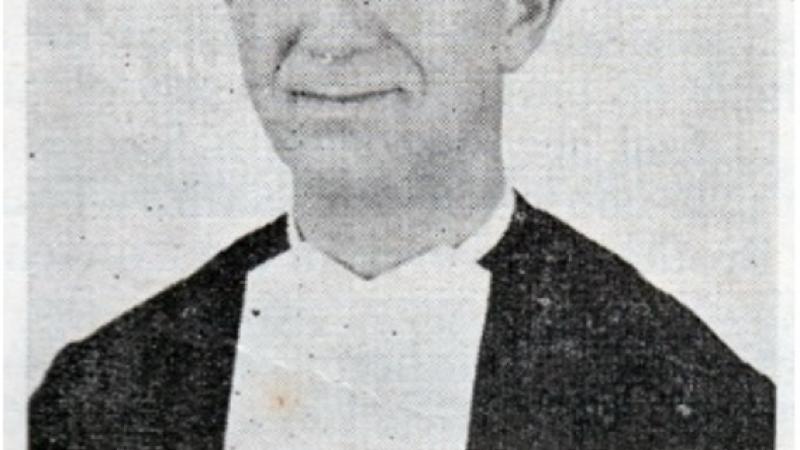
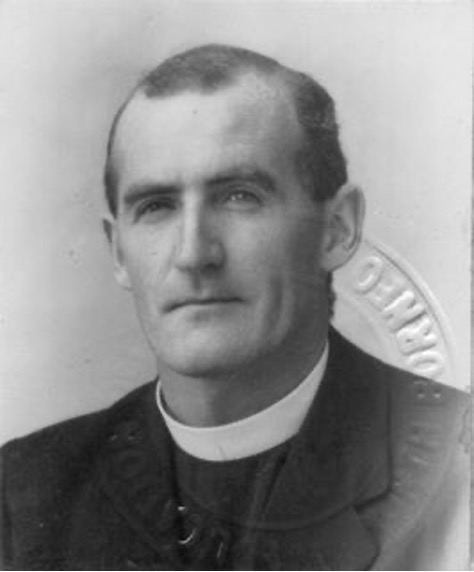
Richard Phelan was born in 1934 into a farming family in Kilmacow, Co Kilkenny, Ireland, a family of 3 boys and 4 girls. They were well brought up in the faith of the Catholic Church. Richard received his primary education at the local St Senan’s Boys’ School, and at the early age of 14 was recruited to join the De La Salle Brothers, going first to the Juvenate in Mallow, Co Cork. This was in September 1948. A year later he progressed to the Juniorate in Castletown, Co Laois and a year later entered the Novitiate, where he was given the religious name Brother Peter. While spiritual formation was the focus, there was time for games and Brother Peter was a tough, no-nonsense defender, especially in the Irish game of hurling.
At the end of the Novitiate year he made his first vows and with 6 others volunteered to go on the missions to the Far East. For this, British teaching qualifications were needed, so the young missionaries were sent to Kintbury in England to sit for the GCE Oxford Exam which Brother Peter passed ahead of time in 1952. Two years later he had graduated as a teacher from St Mary’s Training College, Strawberry Hill, London. Then after a short holiday home he set sail in August1954, with 6 other young Brothers, on the ship called the Felix Roussel from Marseilles, on the 3 weeks journey to the Far East. While the others finished their journey at Singapore, Peter continued on to the teeming city of Hong Kong, where he was to teach at St Joseph’s College for the next 6 years.
Brother Peter recalls: “I was now setting out alone into the unknown. I did not know anybody in Hong Kong. The ship docked on the Kowloon side of Hong Kong harbour at 4.00pm on Tuesday 28th September. It was a beautiful sunny evening. But there was nobody to meet me. I decided to wait in the expectation that a Brother might come. At 6.00pm a Brother arrived. He introduced himself as Brother Raphael.” Later it was discovered that Brother Raphael had in fact been waiting at 2.00pm but was told the ship would not arrive until 6.00pm. Brother Raphael Egan was to be his first Principal followed by Brother Brendan Dunne. Brother Peter took these two Brothers as his mentors all through life.
He was put teaching Form 1A, a cosmopolitan class. The pupils were Portuguese, Indian, Eurasian, English, French, Filipinos and Chinese. He continues: “I started teaching on Monday, 3rd October 1954. It was a new environment for me. I spent a lot of time preparing the lessons I would teach. Once a week I presented my ‘Lesson Notes’ to the Principal for checking and for his signature. I was very interested in teaching and in the progress of the students. Much time at the weekend was spent marking and checking the work of the students.” After teaching in Form1 he was promoted to Form 2 and then to Form 3.
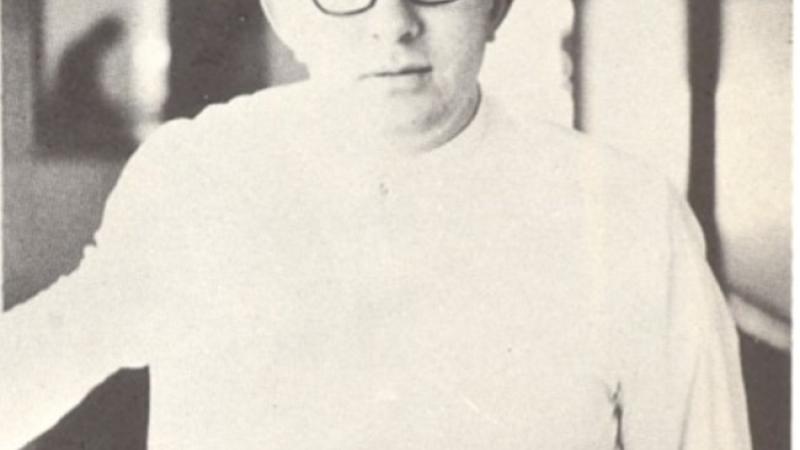
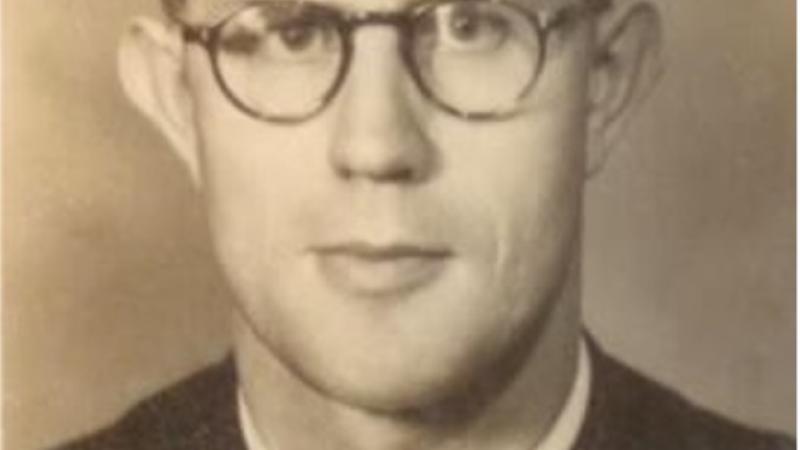
Because of his physical build and receding hairline, Brother Peter looked older than he really was. The boys regarded him as somewhat of a disciplinarian, but not of the shouting, ranting type. He would speak in a measured tone of voice and easily bring everything under control. As one pupil of the time puts it: “I must confess that at the time we all thought that we had drawn the short straw to have had Brother Peter as Class Teacher. He was a strict, no-nonsense teacher. But looking back, I now consider him as the best thing that ever happened to us. If there was one teacher who succeeded in instilling the fear of God in us in a religious sense, it was Brother Peter. May God bless him and keep him.”
After 6 years teaching he was allowed on home leave for the first time in the summer of 1960. En route, he stopped at Rome to take in the sights, including St Peter’s Basilica, St Paul’s outside the Walls and the Catacombs. Then it was on to London, to Dublin and home where he was delighted to meet up with his family and friends again. Besides home leave, he had been instructed to take a degree course in University College, Dublin. In early October he signed up for his degree as a student of Economics, Geography and English. He stayed at De La Salle University Hall, a residence for student Brothers as well as lay students. Brother Peter was a good, methodical student and followed the courses conscientiously. He also found time for games, for cycling and for visits to places of educational interest. By the summer of 1963, armed with a BA degree, he was ready to return to Hong Kong.
After a few weeks in Hong Kong, however, he was posted to La Salle Secondary School, Kota Kinabalu, Sabah, Malaysia ‘the Land below the Wind’, on the great island of Borneo, a much less developed area than Hong Kong. Peter was to remain in Sabah for the rest of his life, in what truly became his second, or probably his first home. He first taught at La Salle School in Kota Kinabalu for 17 years, eight of them as Senior Assistant. His main subjects were Geography and Religion. A serving teacher at the time remembers how the naughty boys were afraid of Brother Peter and nicknamed him ‘Kojak’, the bald-headed police officer who always got his man. While demanding discipline, Brother Peter was also very compassionate and took great care of his students.
He was Scout Master and frequently brought students on field trips, including climbing the great Mount Kinabalu. Both parents and students could rest secure when he was in charge. He would use every trip or outing to make a study of the native traditions and culture for which he held a deep respect. In fact he wrote a number of books and articles on the cultural and legal traditions of Sabah for which he received a number of public awards.
One of Brother Peter’s driving forces in life was a passionate desire to help the weaker students. In 1980 he was given greater opportunities for doing just that when he was posted as Principal to St Martin’s Secondary School, Tambunan. Nearly all the children came from a rural setting and he gave his energy and passion towards ensuring that they had the same opportunity in education as those in the towns. To this end he introduced a programme called ‘no pupil is left behind.’ It was a programme specifically aimed to help the weak and average students.
As a teacher and headmaster Peter was totally committed to his students and his work. He was a very capable teacher and administrator, always systematic and thorough in his own quiet and unobtrusive way. Perhaps the most eloquent expression of the great esteem and respect in which he was held by his past pupils was the generous financial and moral support they continued to give him over the past 20 years for his dream rural mission at remote Nabawan. There were only some wooden shacks there when he arrived, but with Peter’s commitment and his past pupils’ support, these had been replaced by a mini education complex by the time he left.
Despite his large workload, he also found time to delve into one of his favourite interests, a study of the history, archaeology and general culture of the native tribes of Sabah. He kept copious notes and eventually he was able to become the author of a number of books and journal articles. He had a particular interest in standing stones. Brother Phelan was a life-long student and he was the recipient of the 1980s Barwis Award for Far Eastern Studies in London.
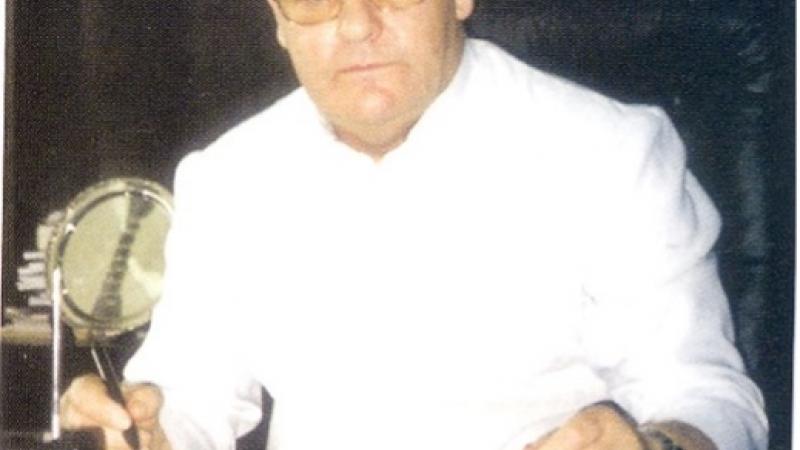
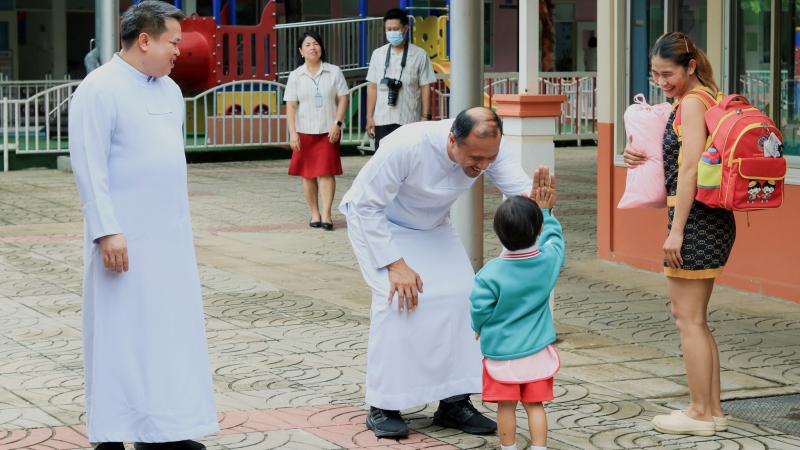
Brother Peter did not take home leave frequently. En route to one such visit, in 1990, he came through Hong Kong and stayed in St Joseph’s College. He met some of his old boys and paid a special visit to St Joseph’s Primary School where his former student, Mr Yung Ying Cheuk, was Headmaster. Mr Yung took the opportunity to have Brother Peter distribute some prizes to the students. As can be seen from the photo, it was a very happy reunion and occasion.
Like all government servants in Malaysia, Peter was obliged to retire from formal teaching at the age of 55. He could then have opted for more leisurely part-time work in private education or in parish life, in the relative comfort of an urban setting. But Peter’s heart was elsewhere and it was not in his nature to take things easy. By 1991 he had come to realise that there was an acute shortage of living accommodation for poor and needy village students in the interior of Sabah. They were cut off from the mainstream of life. He wanted to give them a better chance to succeed. This became his dream for the rest of his life.
He decided to establish a student hostel in a remote rural area called Nabawan. He was allowed the use of a few shacks and decided that this was a start. The place was accessible only by a day’s journey along earthen, timber-logging, unsealed ‘roads’. Because of poverty, long distances and lack of transport facilities many students could not attend the only government secondary school in the area. Gradually Peter set up a hostel called Asrama Butitin (Star) where poor boys and girls from remote villages were provided with accommodation, a simple but healthy diet, free tuition and training in basic skills, as well as a sense of self-esteem and confidence, as they attended the nearby school. Life was simple and basic with none of the amenities and comforts of modern urban living. Here Peter, together with local Brothers, gave totally of himself for the past 20 years. Despite the deprivation and challenges, here he was happy. He would go over the day’s lessons with the students and prepare them for what was to come. His close friend, Brother Egbertus, humourously recalls how it was somewhat of a battle to convince Brother Peter to get internet access for the house. But when he did agree, he never looked back.
The Nabawan concept was to provide a bridge of opportunity for many who were without hope; that bridge was steadfast and was crossed by many who now have grateful memories. Those who crossed that bridge found in Brother Peter a rock of common sense and a rock of faith.
Like all true missionaries Peter was respectfully conscious that God was there before him. There was in him no semblance of arrogance, superiority or condescension. He was a deeply religious man, in a broad, inclusive and holistic way and in the absence of a full time priest he often conducted religious services and ministered to the people’s spiritual needs. He presided over baptisms and funerals and conducted prayer services where he would distribute Communion. These services were much appreciated by the people. One old boy has this special memory: “When I think of Brother Peter I think of him praying the Angelus with us faithfully at 12 o’clock. When I was with him in Nabawan, we happened to be in a church there one day at 12 noon and I asked him to lead the Angelus. I said that I would not be cheated out of reliving the Angelus with him.”
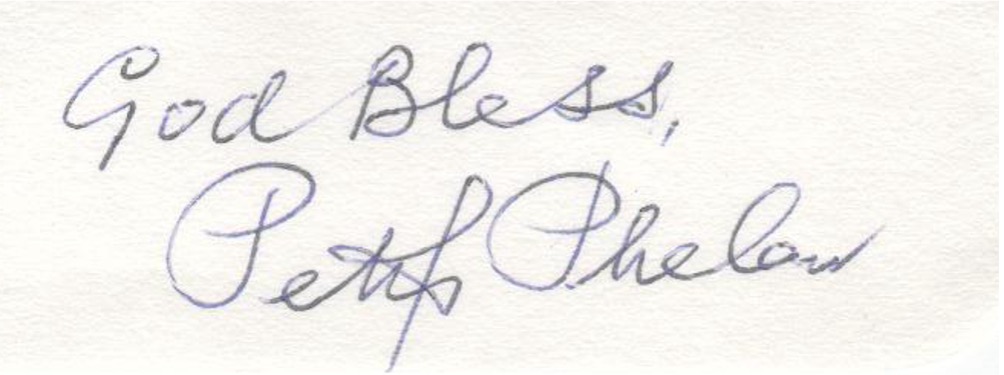
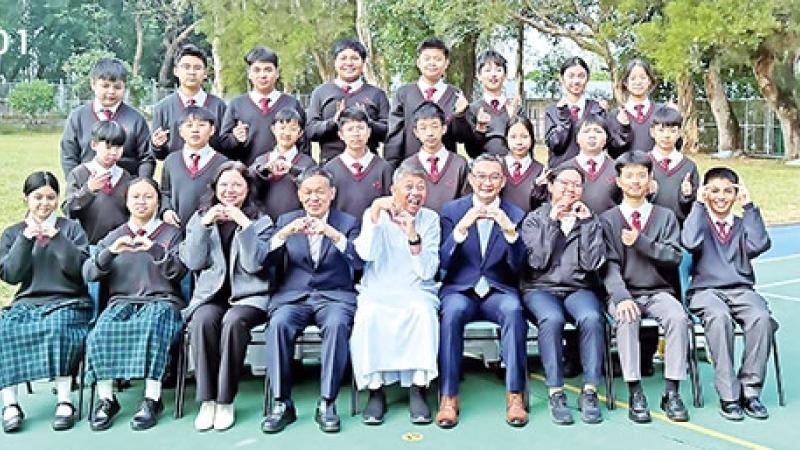
He must have felt that time was running out because in September of 2009 he made a point of paying a nostalgic visit to St Joseph’s College, Hong Kong, partly to attend the 50th anniversary gathering of the Class of 1959. As it turned out, it was to be his final farewell to Hong Kong. Brothers Alphonsus Breen and Thomas Favier take up the story: “At a reunion with his former students here in Hong Kong recently, Brother Peter was asked to give a speech. In typical fashion he had written it all out first in beautiful handwriting. In a reference to his reputation as a good disciplinarian he spoke the following words: ‘Our Holy Founder, St John Baptist de La Salle told us to treat all our pupils equally.’ With a typical smile he concluded: ‘That’s why I treated you all equally badly!’”
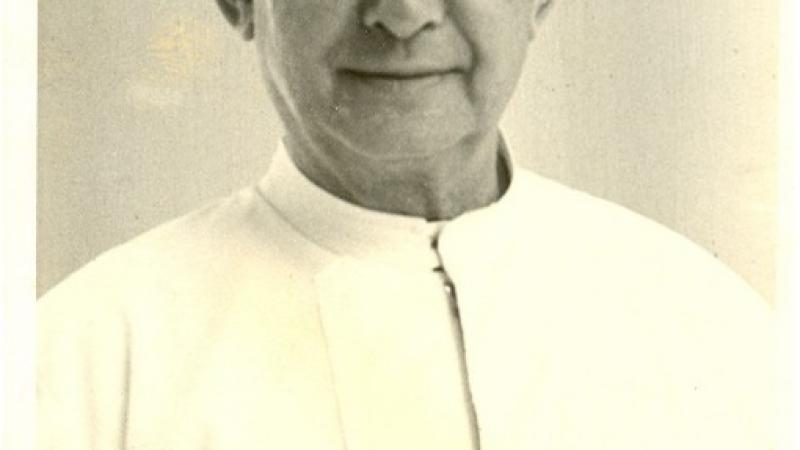
At this reunion, his former students saw him in a new light. Here is how they described their feelings: “The final speech of the night was reserved for the once physically imposing figure of Brother Peter Phelan, FSC, a rookie Lasallian Brother of 20, using Form 1A as his first teaching experience with strict disciplinary measures. Nevertheless, we took it on the chin—no pain, no gain; no complain, either! Now Brother Peter has shrunk considerably in his advancing years, not much taller than some of us. He is much more mellow, humourous and in many ways very likeable.”
Brother Peter had fought a running battle with skin cancer for almost 30 years and it was by sheer will-power and self-discipline that he kept it at bay for so long. The cancer gradually moved deeper to the nerves. He had undergone treatment in London, Malaysia and Singapore. Implacably, the disease had taken hold and there were outbreaks every so often which became more and more difficult to control. There would be eruptions on his head, face, neck, hands and legs. He was finally introduced to an organic supplementary food called Melilea and gave it a try for a month or two, taking no other food and losing weight rapidly. At the same time he continued his work in the hostel without complaint.
By January 1910 it became obvious that he could not continue. All options had been exhausted and he was too weak to carry on. He had become a pale shadow of his former self, mere skin and bone. He agreed to return to Ireland, to Miguel House, a nursing home for ailing Brothers. It was clearly heart-breaking for him to leave his beloved Sabah. When the time of departure came, many of his students, former students and friends were in tears. He was a truly detached missionary - in his room all his worldly possessions could fit on a chair.
On the 18th February 2010, Brother Thomas Lavin accompanied Brother Peter on his final journey to Ireland and to Miguel House. The Brothers there were somewhat shocked at the deterioration in his condition but after some days he seemed to be improving. Nobody expected the end would come so soon but come it did on the 27th February. The funeral took place in Castletown on the 2nd March 2012. A large congregation of family and friends attended the funeral Mass, including his brother Jim and sisters Mary Joe, Liz, Ann and Sister Ita.
Brother Peter’s departure and sudden death left a deep void in the hearts of his friends in Sabah. News of his passing spread like wildfire and the ‘Sabah Daily Express’ paid him eloquent tribute, concluding by saying: “Many of his students and associates will remember him as a great and dedicated teacher, a tireless worker and as a friend who cared. He touched us all in his own unique way”. In recognition of his heroic work Peter would have been offered various public awards or titles, but he always avoided the limelight, shunning all praise and adulation. He is reported to have said that the only letters he ever wanted after his name were FSC and RIP!
Unexpectedly, a hand-written poem by Brother Peter himself, was discovered in his bedroom desk drawer, his final poignant message. The title is ‘Miss me but let me go.’
When I come to the end of the road,
And the sun has set for me,
I want no rites in a gloom-filled room,
Why cry for a soul set free?
Miss me a little but not too long,
And not with your head bowed low,
Remember the love that we once shared,
Miss me but let me go.
For this is a journey we all must take,
And each must go alone,
It’s all a part of the Master’s plan,
A step on the road to home.
When you are lonely and sick at heart,
Go to the friends we know,
And bury your sorrow in doing good deeds,
Miss me but let me go.